

Dream Story (0 of 2), The Master and Margarita & Easter Quiz 2026
Geoffrey Crayon, flour-coated worms and Easter eggs

Dear classics reader,
In this week’s Easter basket you will find:
The launch of our April read-along of Dream Story;
The announcement of our monthly read-along for May;
Birthday wishes to Washington Irving;
A preview of coming attractions and other notices;
And for paid subscribers:
The week’s new classics – including a mad Parisian rat;
And a devilishly difficult Classics Easter Quiz.
This newsletter may be too long for your email inbox. If so, please click ‘View entire message’ at the bottom to see the full newsletter – or visit Substack.

Dream Story (0 of 2)
‘Twenty-four brown slaves rowed the splendid galley that would bring Prince Amgiad to the Caliph’s palace.’
That is the first sentence of Dream Story. Today we start reading Arthur Schnitzler’s haunting, erotic novella, which was first published 100 years ago.
All the details of our read-along can be found here.
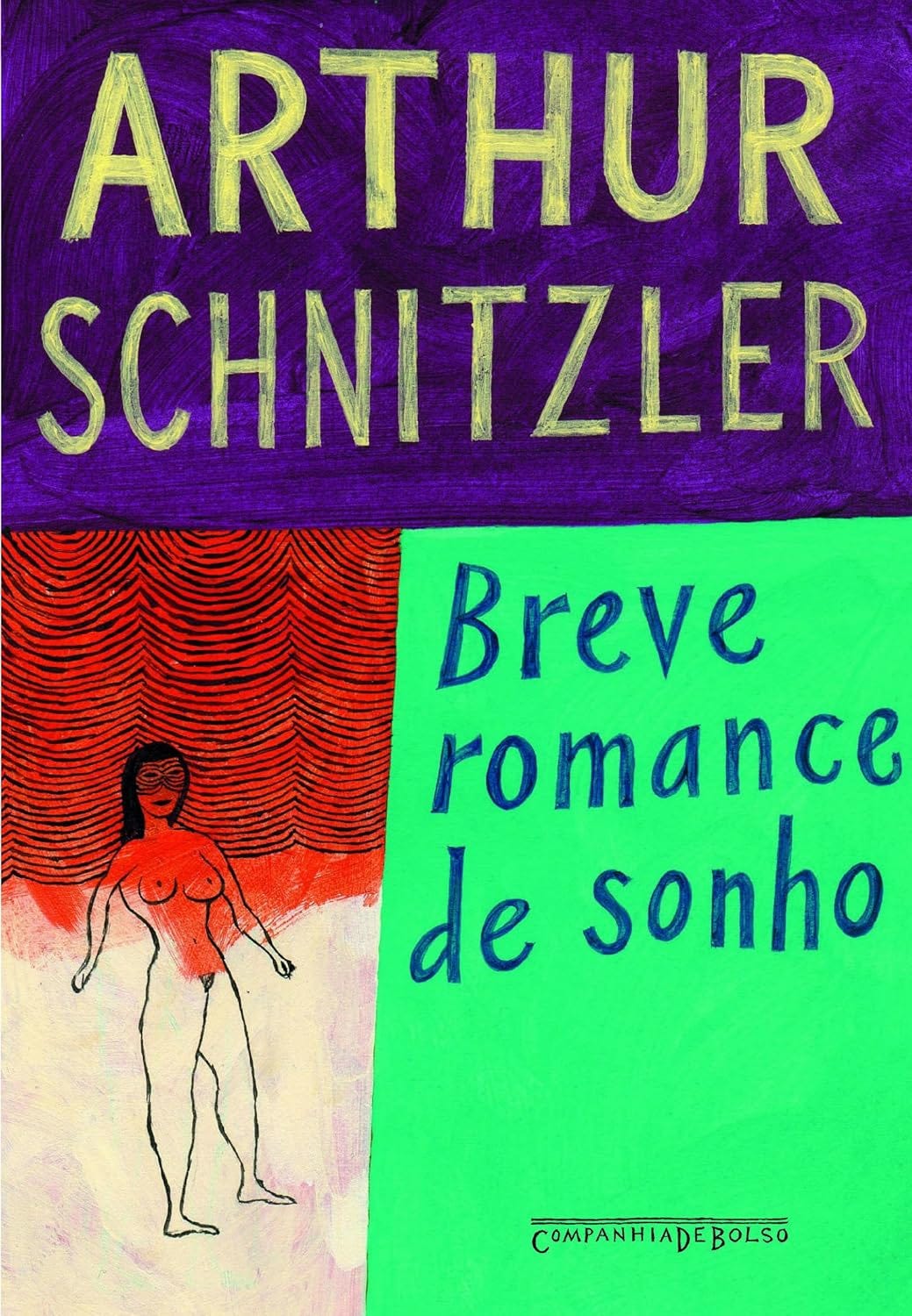
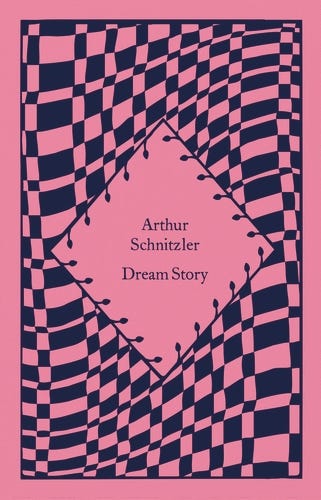
Before we begin, I thought you might enjoy a gallery of Schnitzler’s various book covers from around the world. Together they act as a visual introduction to what we can expect in the book . . .
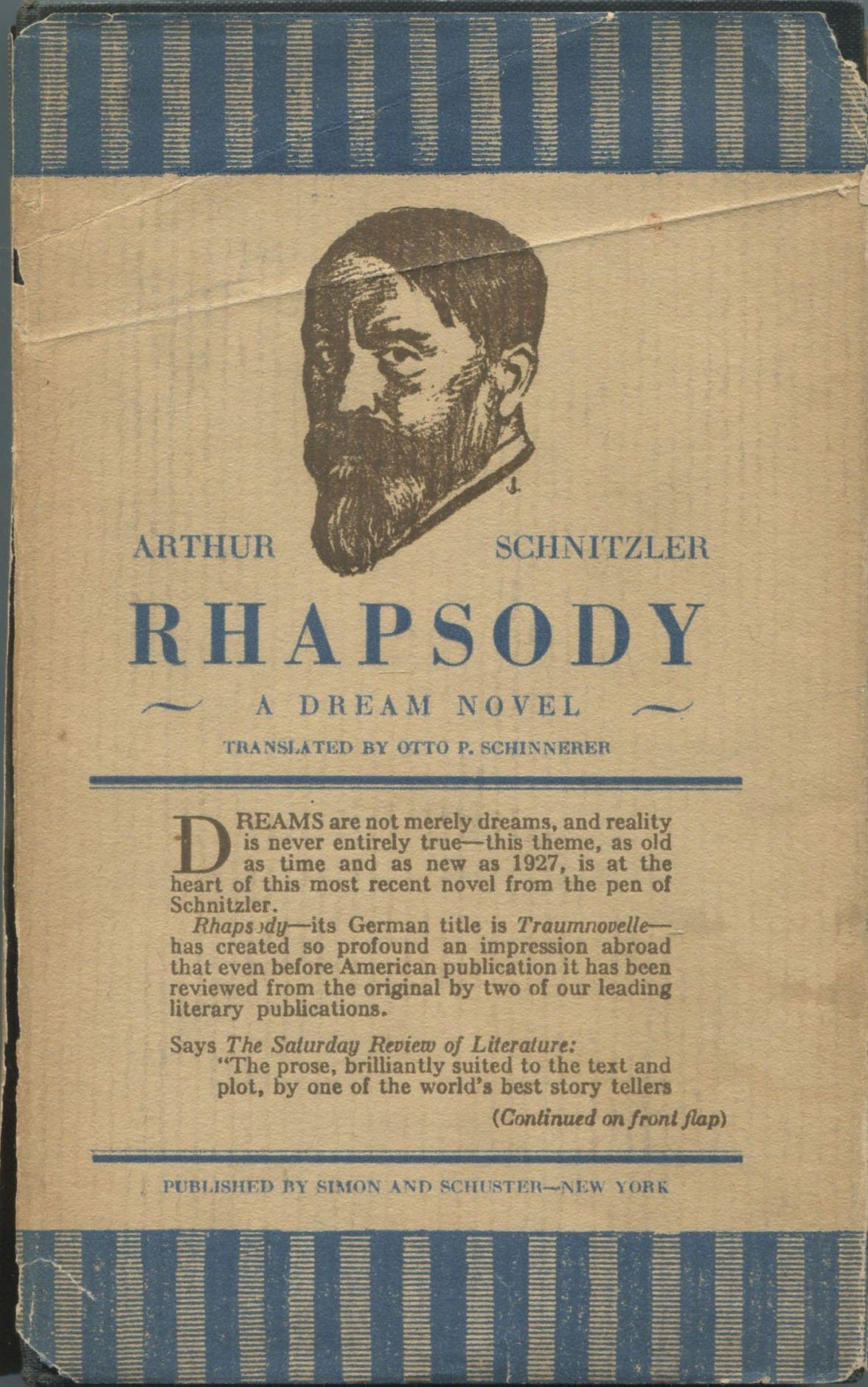
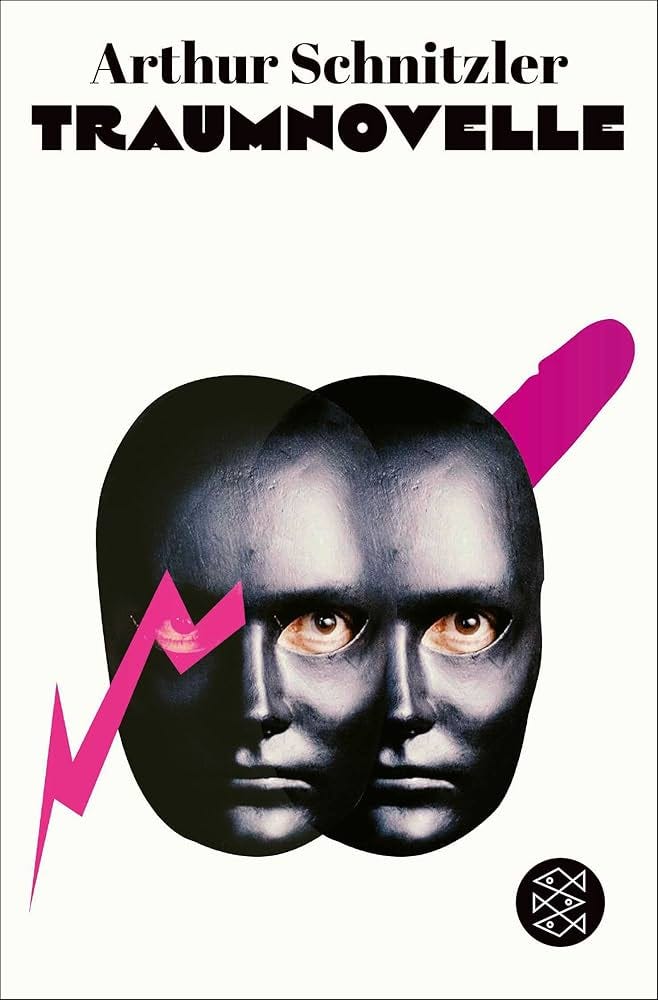
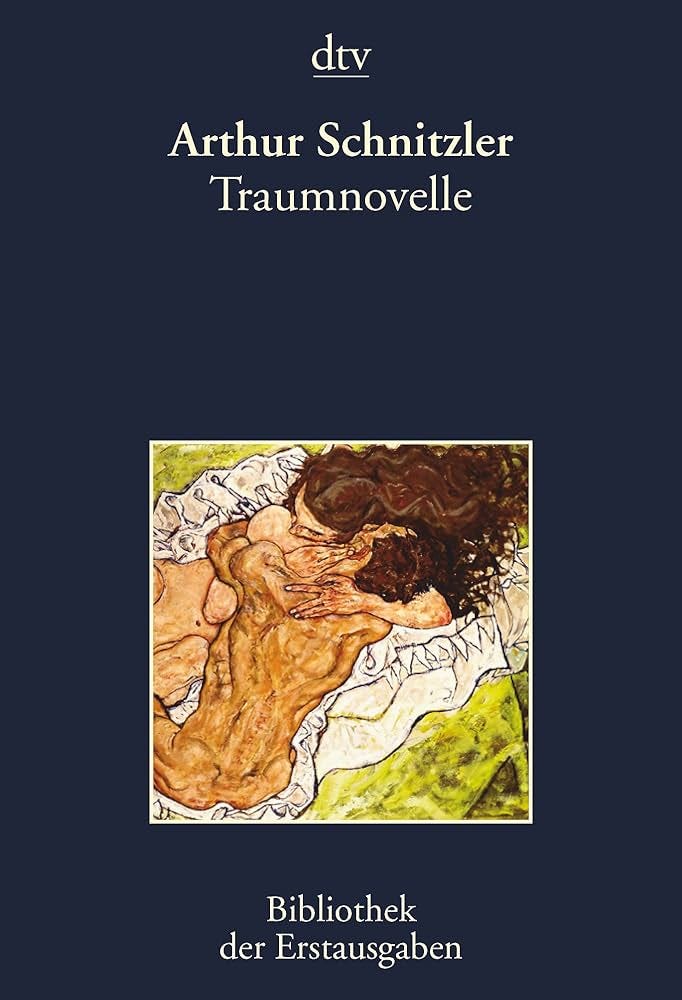
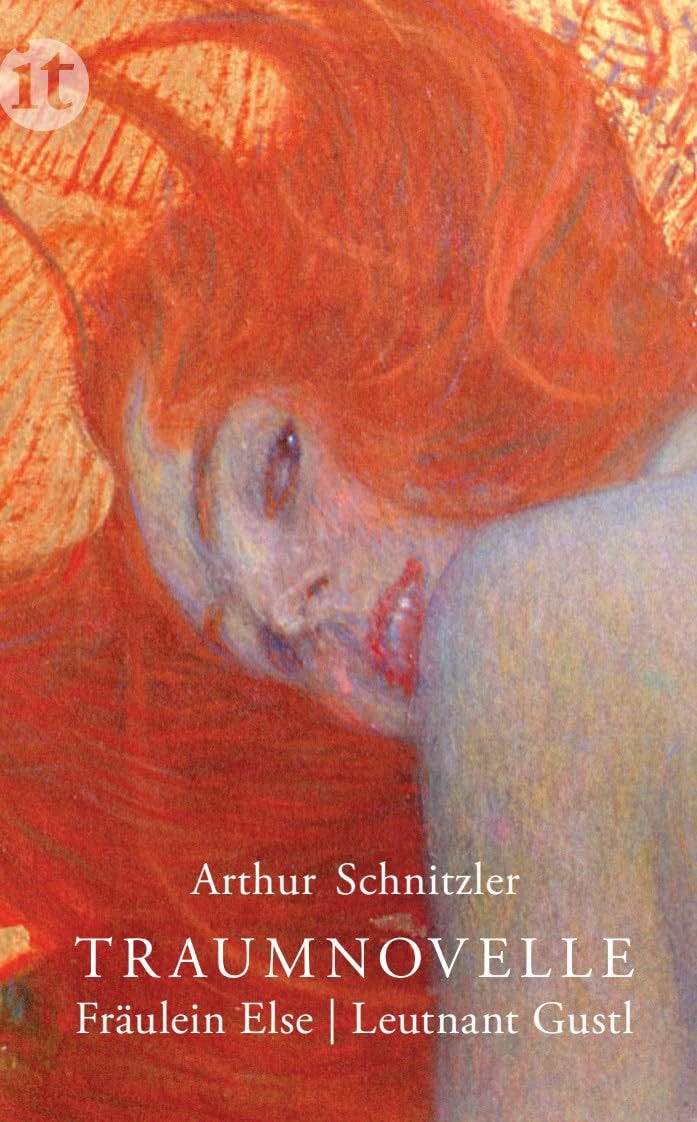
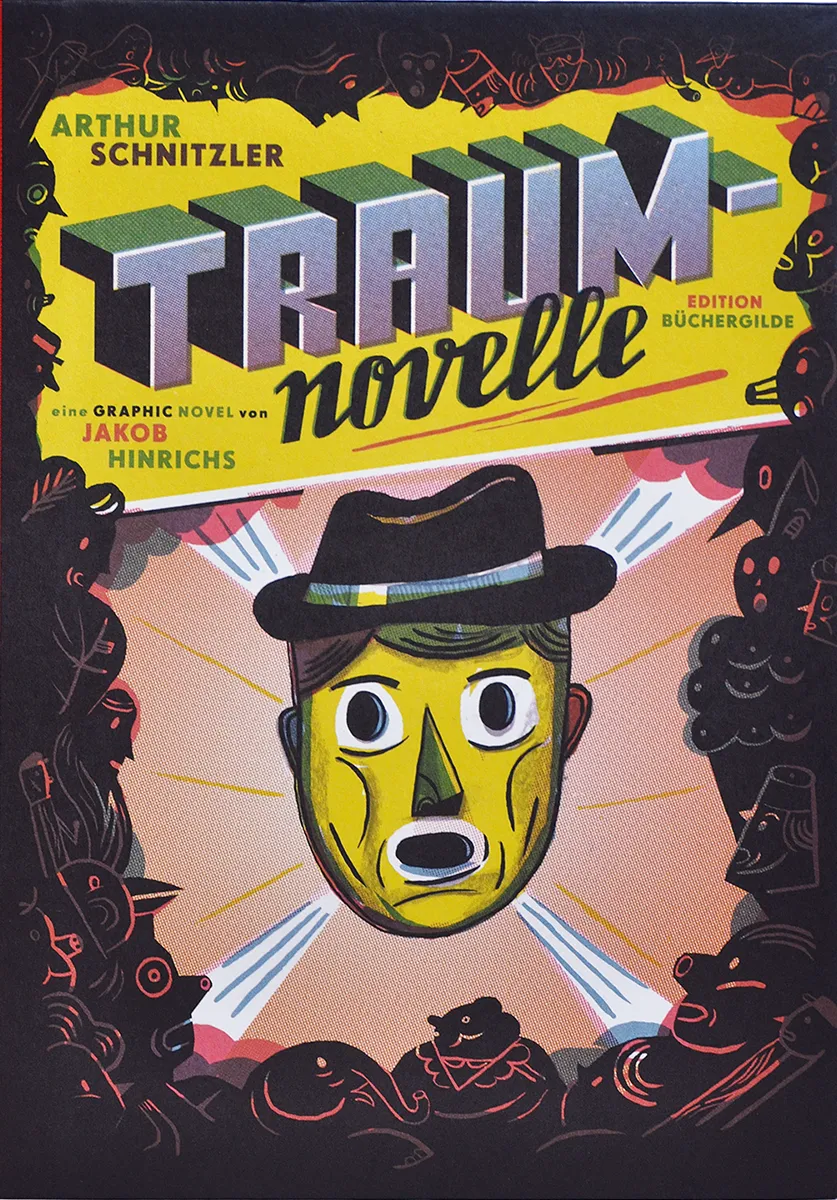
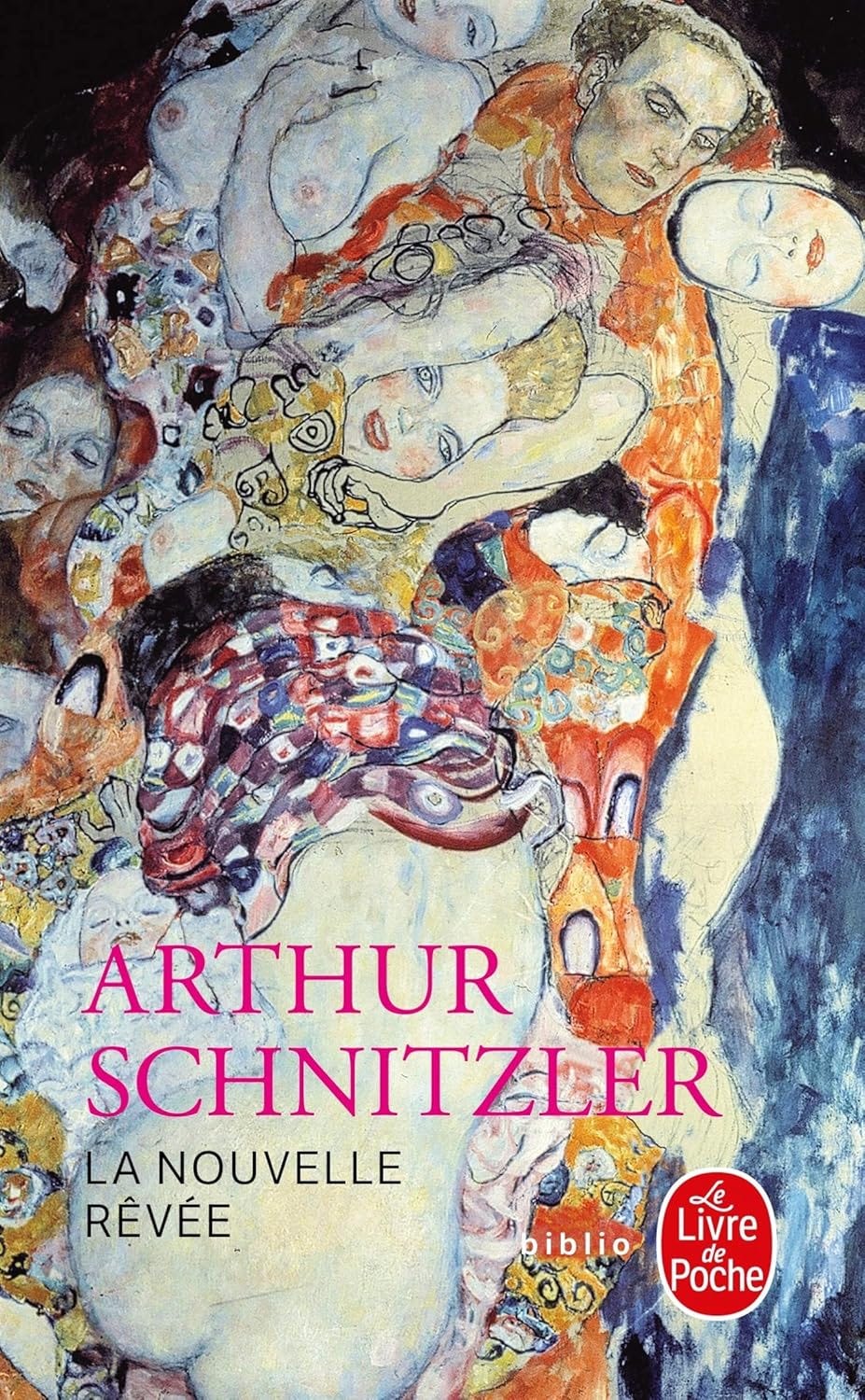
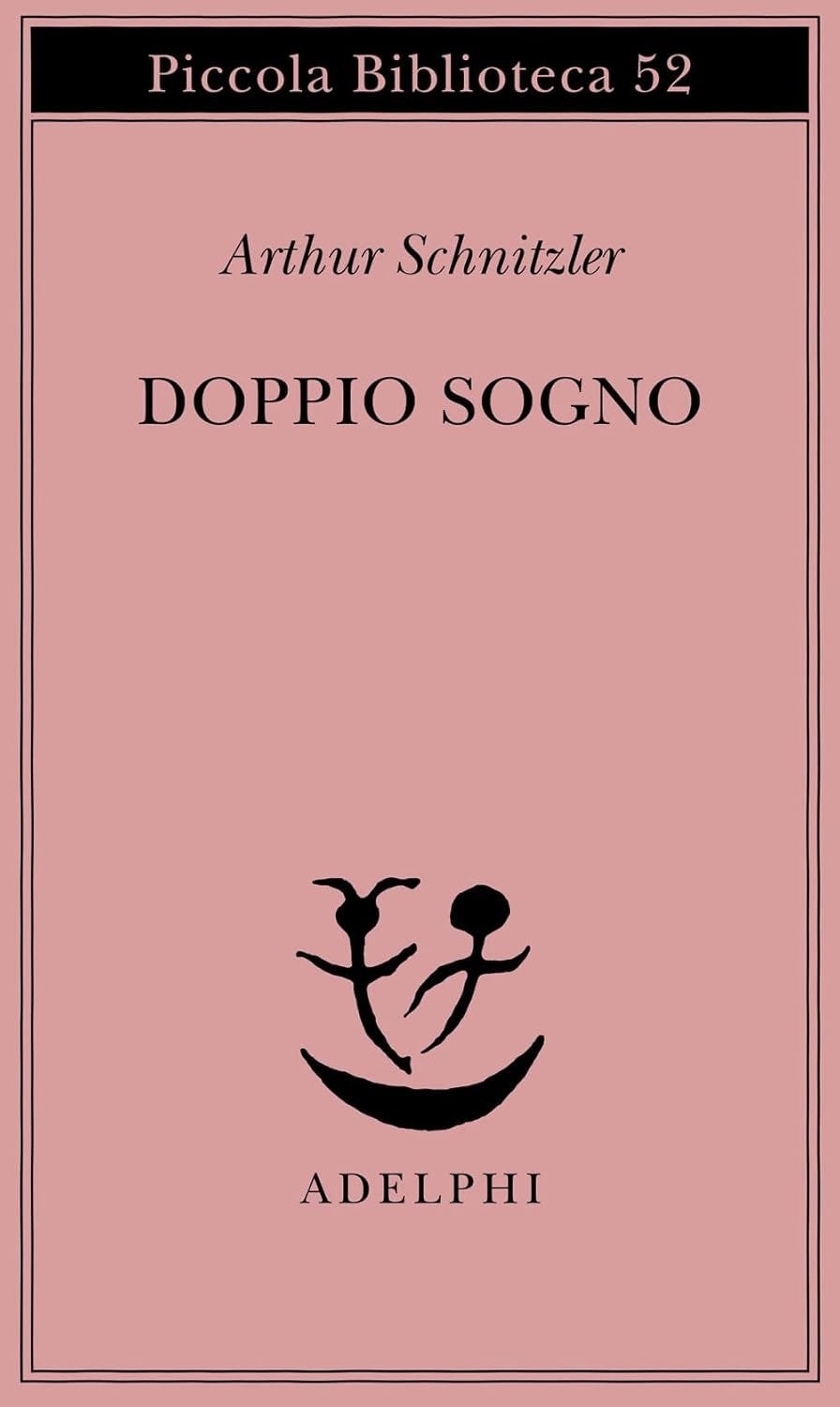
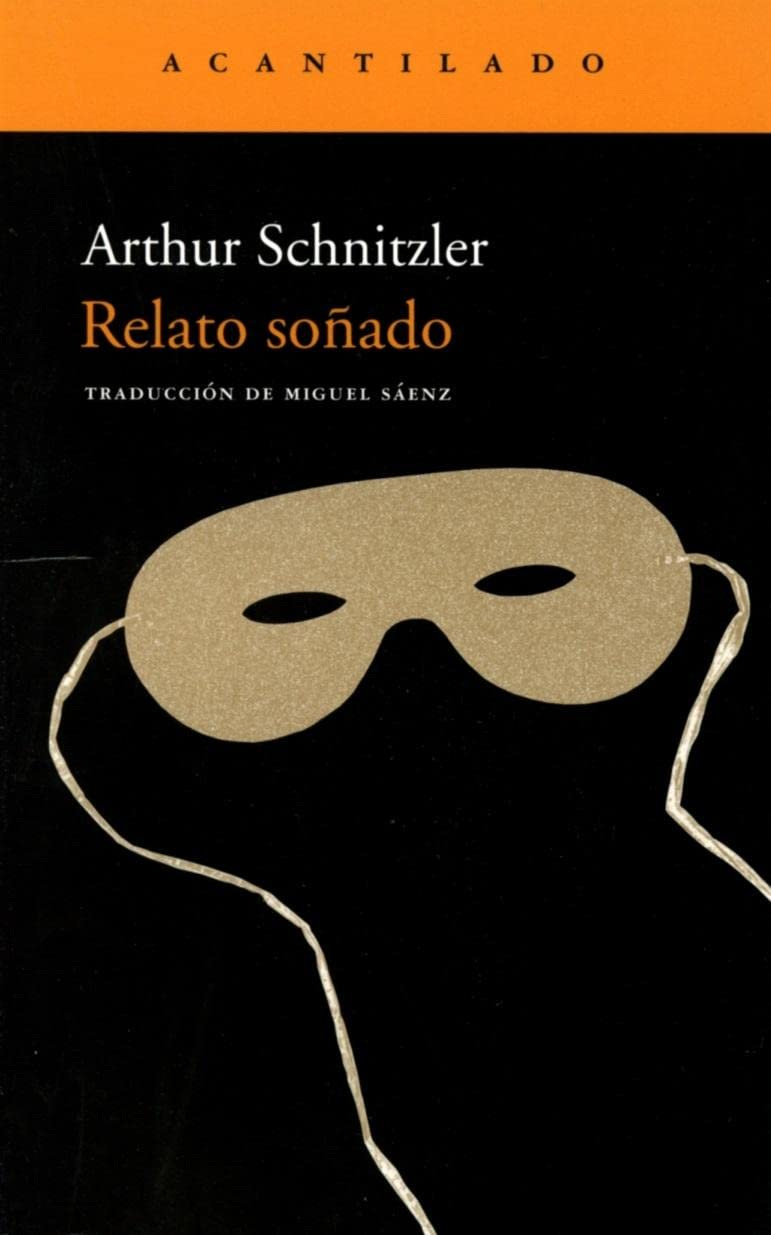
I look forward to discussing Chapters 1-4 next Friday 10th April.
Here are links to our previous Dream Story posts:
The Schedule (13 March)
Arthur Schnitzler (27 March)
As ever, these weekly read-along discussions of Dream Story will be available to paid subscribers only. More details here.
But if you – or anyone you know – would like to join this or future read-alongs, but can’t afford a paid subscription, just let me know and I’ll send a gift subscription.
May’s read-along – The Master and Margarita
I’m delighted to announce our next monthly read-along. Please join me in May to read Mikhail Bulgakov’s novel, The Master and Margarita.
A censored version of The Master and Margarita was first published in 1966-7, but Bulgakov began writing it in 1928 and worked on it until his death in 1940.
What is it?
Bulgakov was born in Kiev but moved in 1922 to Moscow, where he wrote subversive plays and novellas until Stalin’s government banned his work. He devoted the last dozen years of his life to writing, in secret, his satirical masterpiece, The Master and Margarita.
It is the story of a writer, the ‘Master’, detained by secret police for writing a novel about Pontius Pilate. Excerpts from this naturalistic manuscript are interspersed within the fantastical story of the Master’s lover Margarita, who attempts to rescue him. Meanwhile, the Devil stalks the streets of Moscow, calling himself Professor Woland and carrying a poodle-headed cane. Woland’s henchmen include the giant gun-toting cat Behemoth, a fanged assassin and a female vampire.
Why are we reading it?
The Master and Margarita is an unforgettable, fantastical, frightening satire of Stalinist Russia that includes the famous line: ‘manuscripts don’t burn’. It will make a fascinating comparison to both The Brothers Karamazov and Dream Story.
Ironically, in 1930, Bulgakov did burn the first draft of The Master and Margarita and had to rewrite it from memory. He worked on it until he died, and then his widow Elena – the model for ‘Margarita’ – had to wait 26 years before she could publish a censored version in the magazine Moscow. The first uncensored edition in the USSR was published in 1973.
Which translation should I read?
There are several different English translations available. It won’t matter which one you have, but if you are getting hold of a new copy, here are some details to help you choose. And this website is extremely useful for making a final decision.
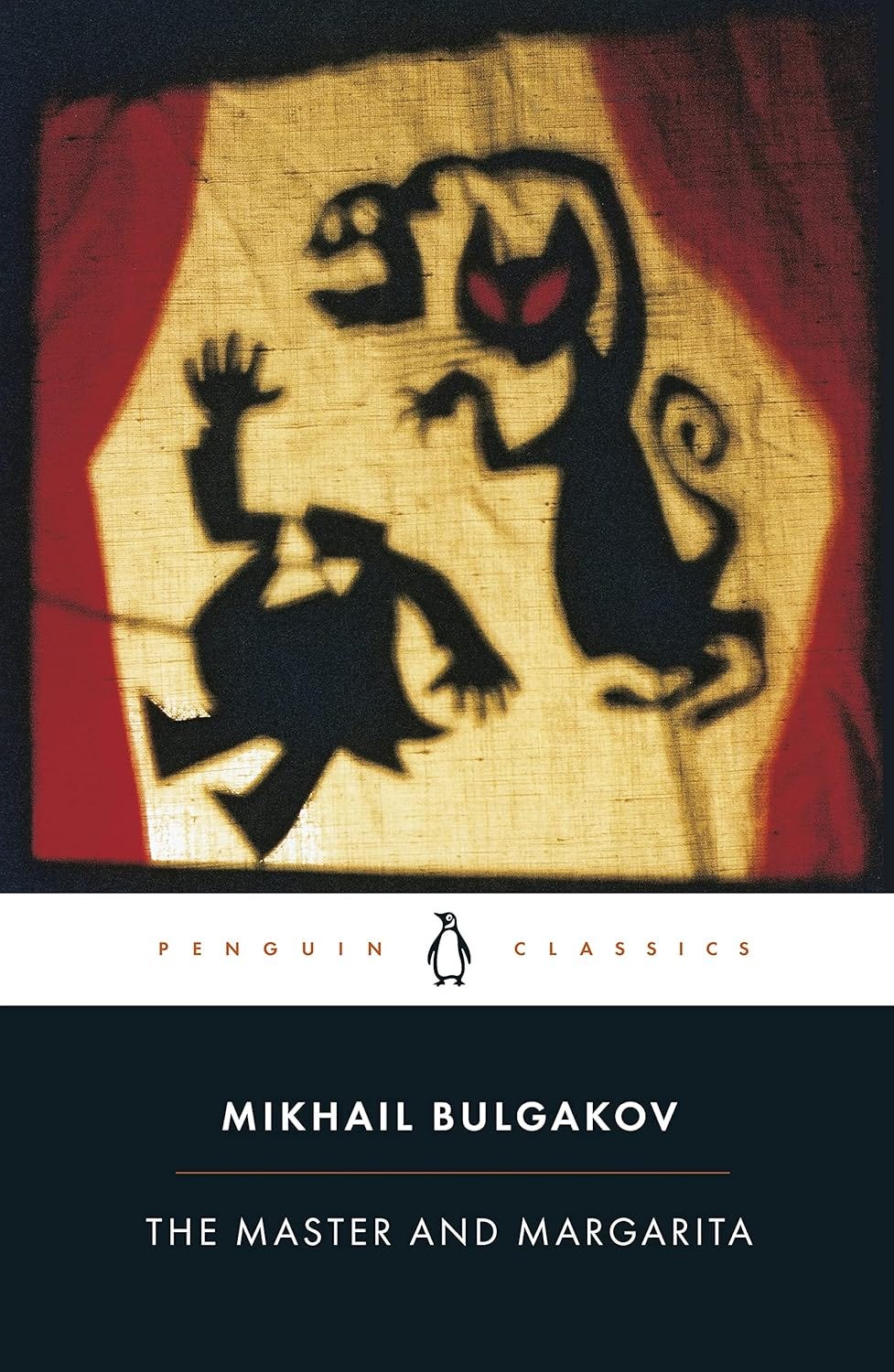
I will be reading the 1997 Richard Pevear and Larissa Volokhonsky translation in Penguin Classic, because it’s the beloved edition I’ve read before. It is available either in the regular Penguin Classics livery:
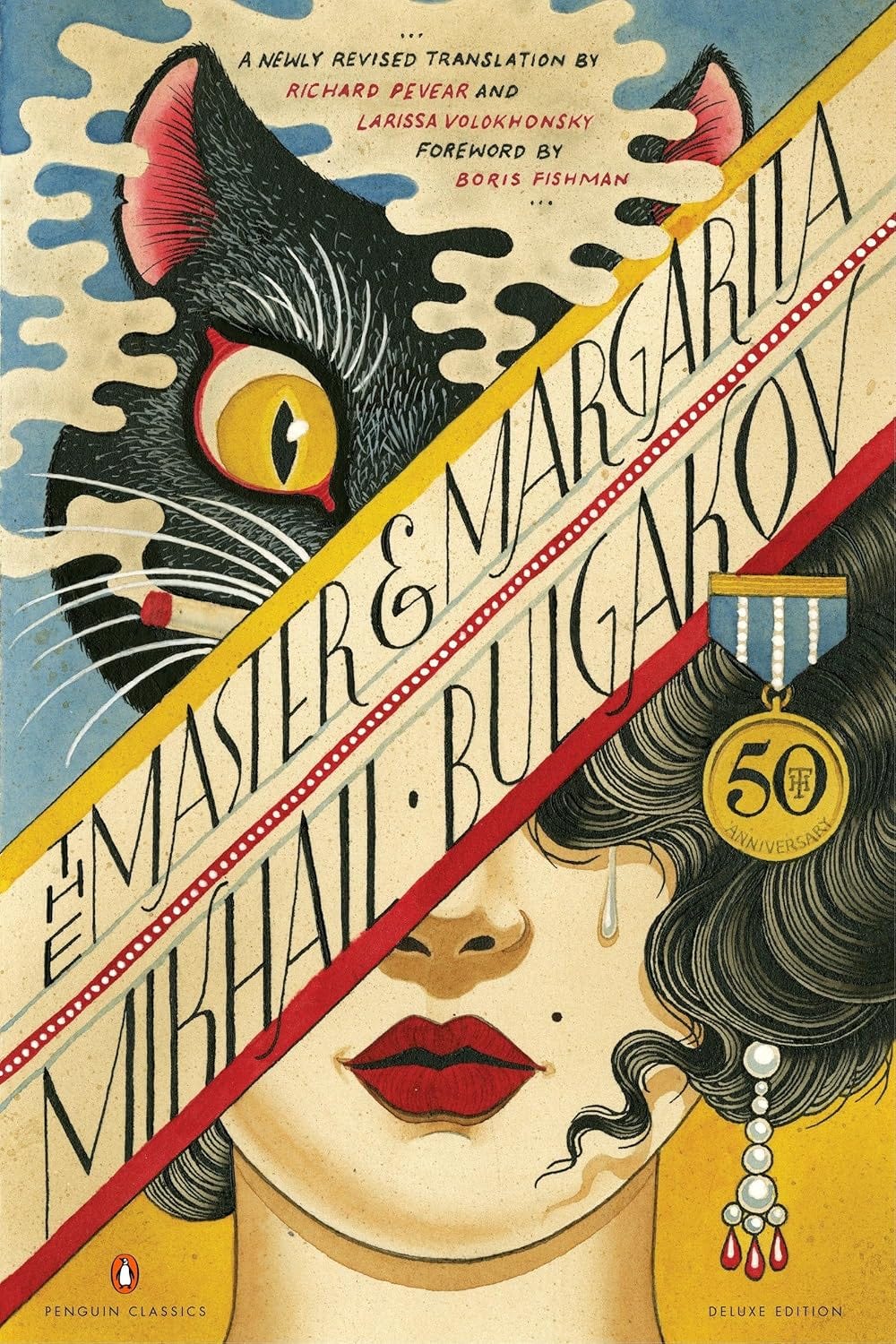
Or there’s a Penguin Classics Deluxe Edition, with stunning endpapers, which was published in 2023 to mark 50 years since the first publication of the uncensored text. As Boris Fishman says in his foreword:
Until now, The Master and Margarita has been something of a cult classic . . . [T]hanks to this luminous translation, newly revised for this edition and distinguished not only the stylistic elegance that has become a hallmark of Pevear and Volokhonsky translations but also a supreme ear for the sound and meaning of Soviet life, there has never been better help along the way.
Alternatively, there are four other mainstream English translations.
Two appeared in 1967: by Mirra Ginsburg and Michael Glenny.
I wouldn’t particularly recommend the Ginsburg, because she used the censored version of the Russian text (and thus lost a lot of the original).
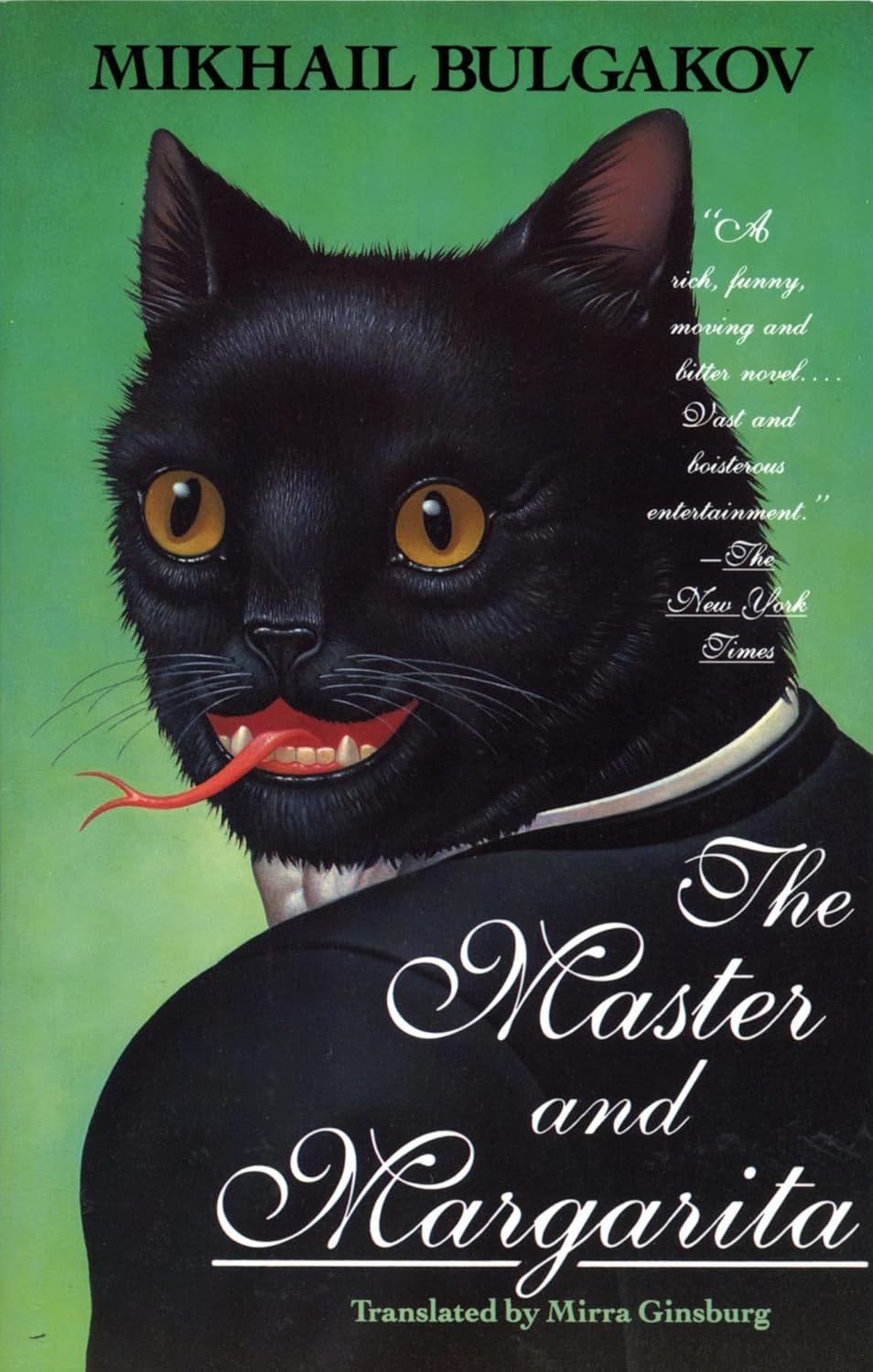
Glenny had access to more material than Ginsburg and his style is admired by Russians, but he takes liberties with the text and he hadn’t read the uncensored novel in its entirety.
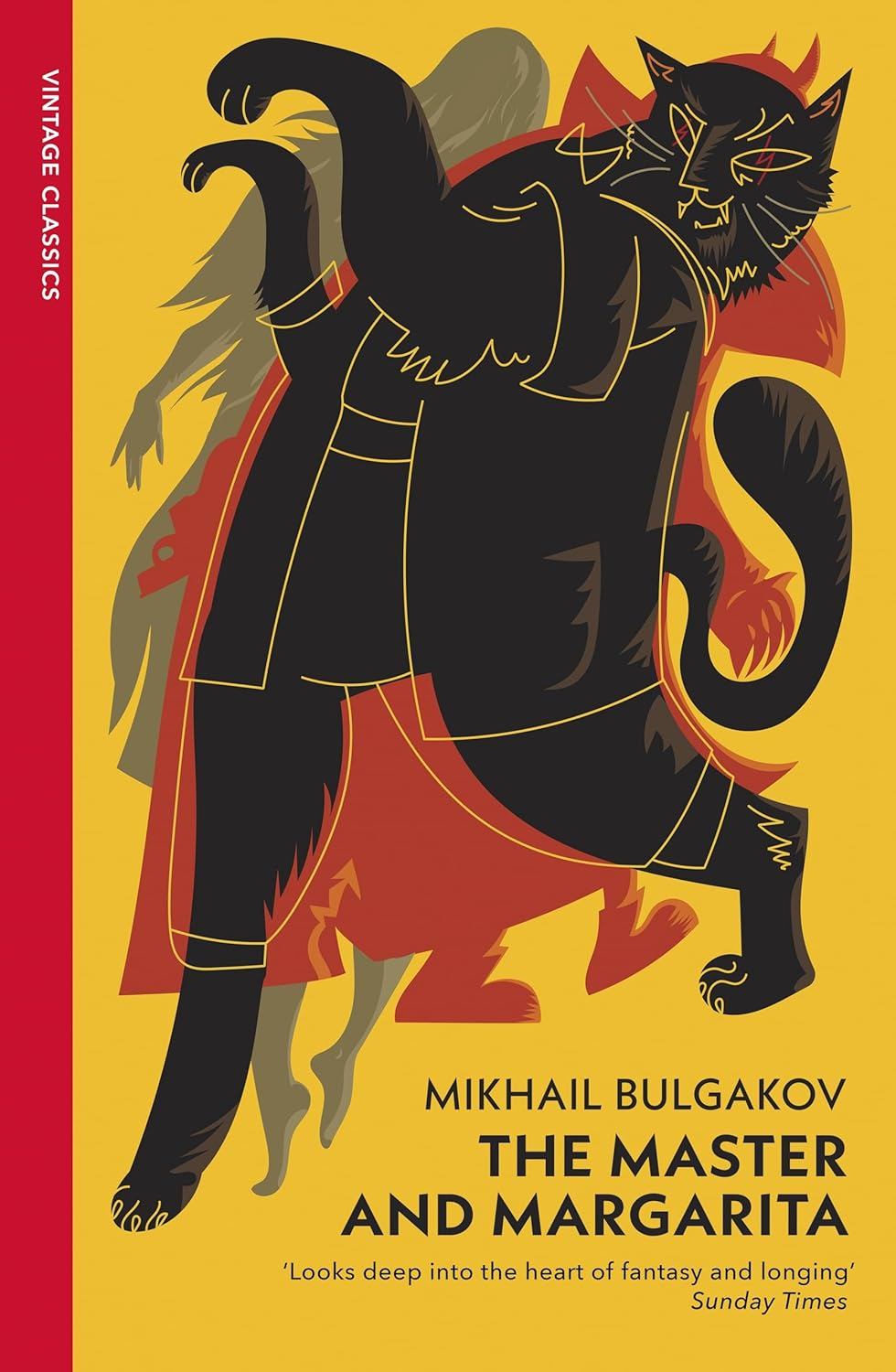
In 1993, Diana Burgin and Katherine Tiernan O’Connor produced the first translation of the fully uncensored Russian text. It is published by Picador in the UK and The Overlook Press in the US. Laura D. Weeks – in The Master and Margarita: A Critical Companion – says:
‘This translation can be recommended for a number of reasons. . . . It faithfully reproduces Bulgakov’s syntax, while at the same time devoting attention to key leitmotivs and repeated phrases crucial to the novel’s structure. The translators have also devoted a great deal of effort to clarifying various details of clothing, food, and architecture, which feature so prominently in Bulgakov’s universe.’
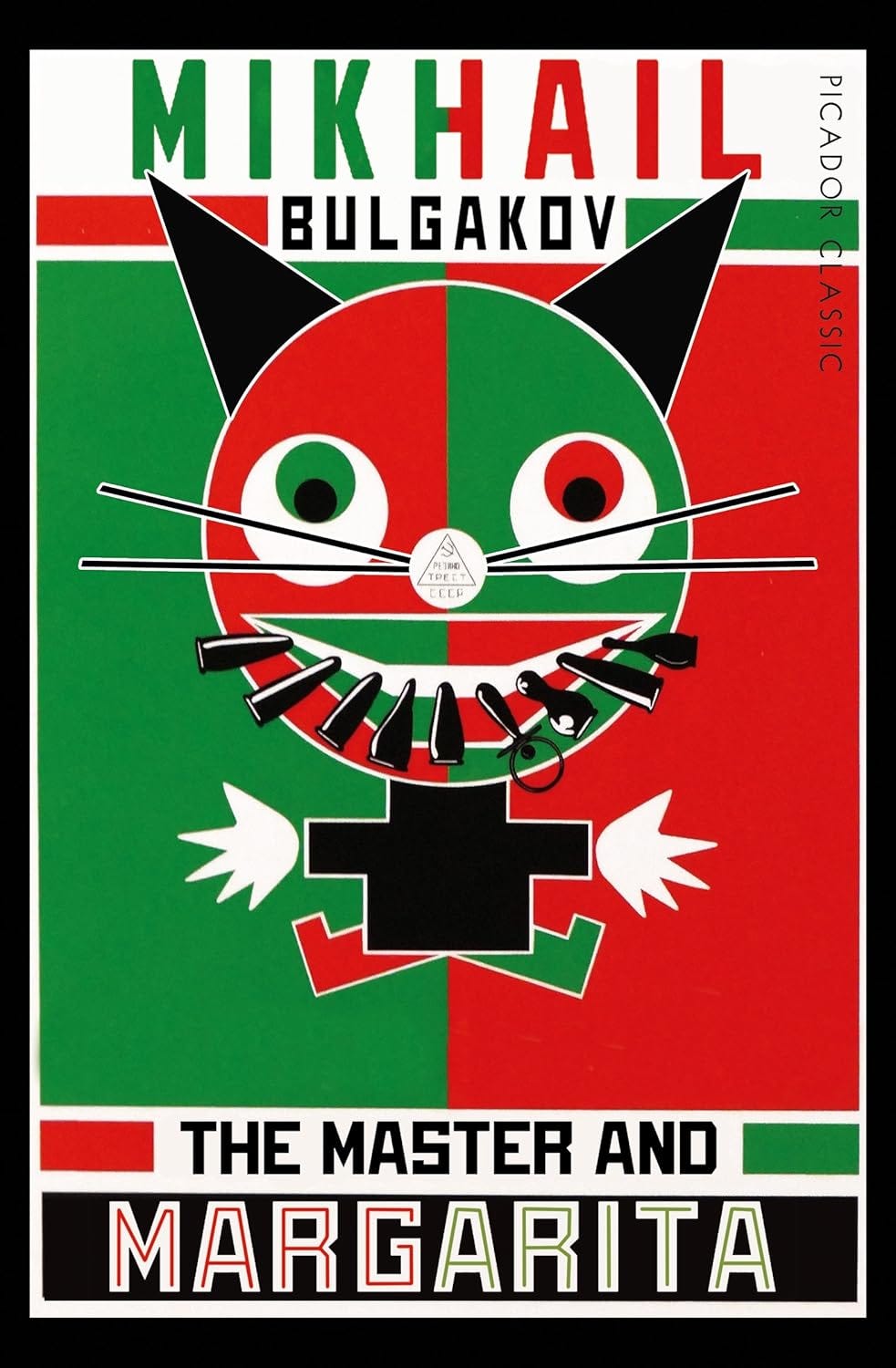
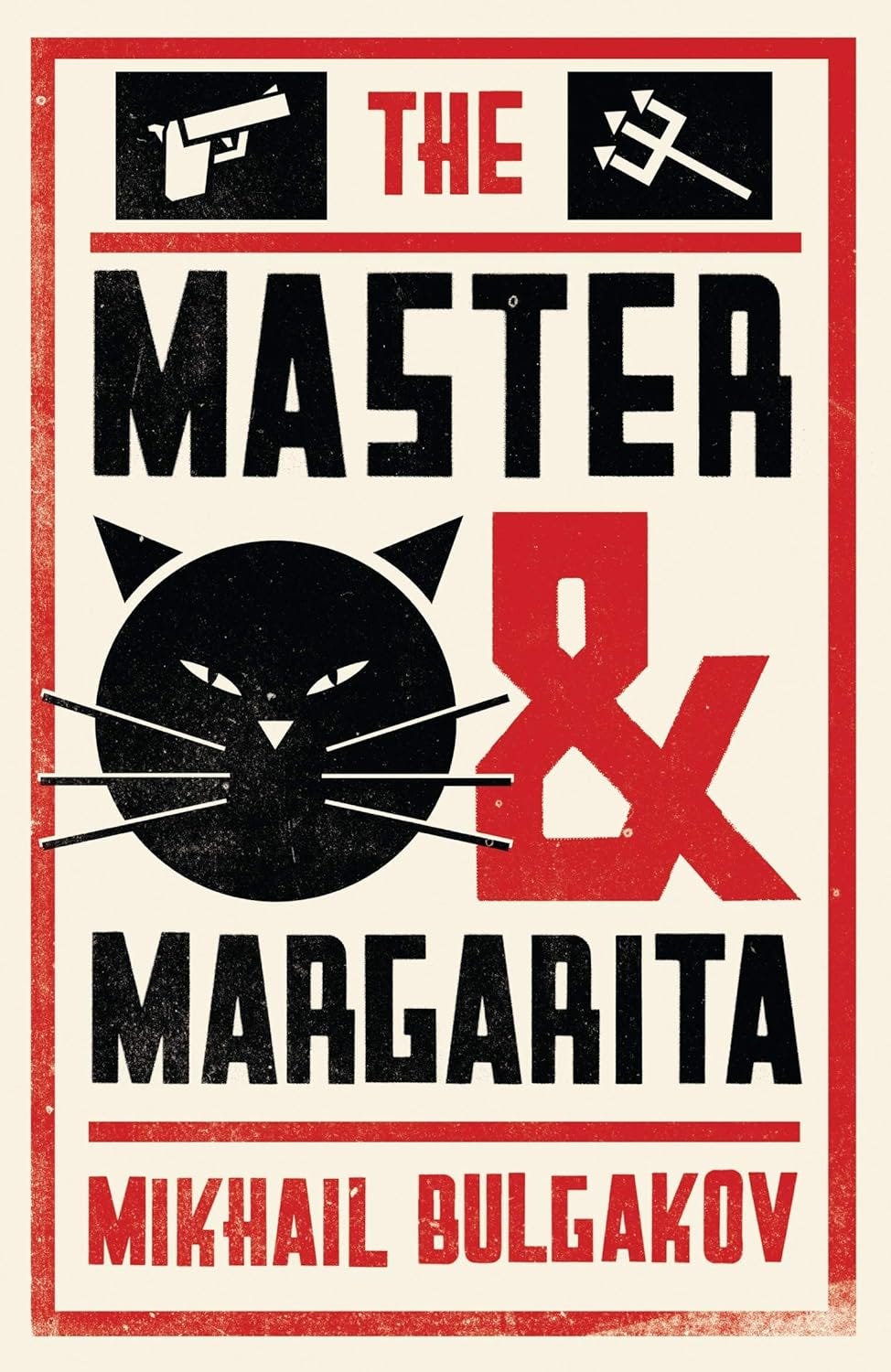
Pevear and Volokhonsy published their edition in 1997 (see above) and then, in 2008, Hugh Aplin’s translation appeared. It is said to be the translation that best captures the rhythm of Bulgakov’s prose.
How will we read it?
The Master and Margarita is just under 400 pages (in my edition) and has 32 chapters.
I suggest we read it over five weeks:
We’ll start reading on Friday 24th April.
On Friday 1st May we’ll discuss Chapters 1-6;
On Friday 8th May we’ll discuss Chapters 7-13;
On Friday 15th May we’ll discuss Chapters 14-18;
On Friday 22nd May we’ll discuss Chapters 19-25;
And on Friday 29th May we’ll discuss Chapters 26-32 and the Epilogue.
Then, if you’re near London, you’d be very welcome to book a ticket for our discussion of The Master and Margarita at the Hatchards Classics Book Club on Thursday 4 June.
We meet downstairs at Hatchards (187 Piccadilly) on the first Thursday of every month at 6.30pm – tickets cost £5 with a free Hatchards Reward Card and include a glass (or two) of wine. These book club events are not live-streamed, but afterwards I post a report of our discussion here on Substack.
Our weekly read-along discussions of The Master and Margarita will be for paid subscribers only. More details here.
If you – or anyone you know – would like to join this or future read-alongs, but can’t afford a paid subscription, just let me know and I’ll send a gift subscription.
If you buy a copy of The Master and Margarita through Bookshop.org (UK) or Bookshop.org (US), Read the Classics will earn a commission from your purchase. Thank you in advance for your support!

Happy Birthday Washington Irving
In other news, Washington Irving was born on this day in 1783.
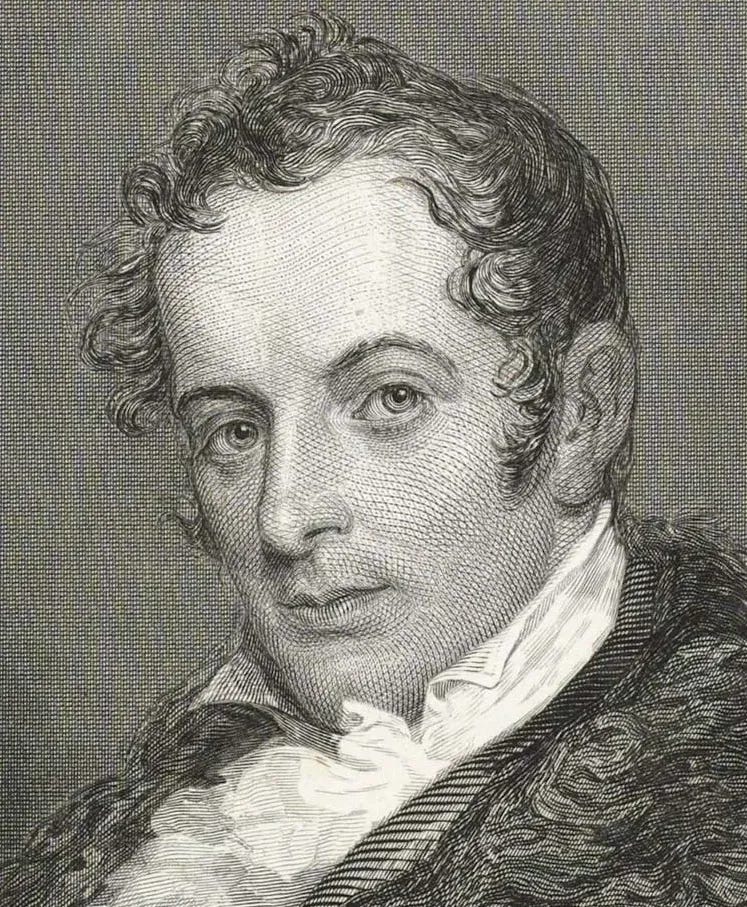
Irving was America’s first professional writer. He was born and raised in New York and published his rollicking History of New York in 1809 under the pseudonym ‘Diedrich Knickerbocker’. But he made his international reputation in 1819–20 with The Sketch-Book of Geoffrey Crayon, Gent. and went on to write many more stories, novels and travelogues, as well as biographies of Columbus, Goldsmith, Mohammed and others. He served as the US ambassador to Spain between 1842 and 1846 and is buried in Sleepy Hollow Cemetery in New York State.
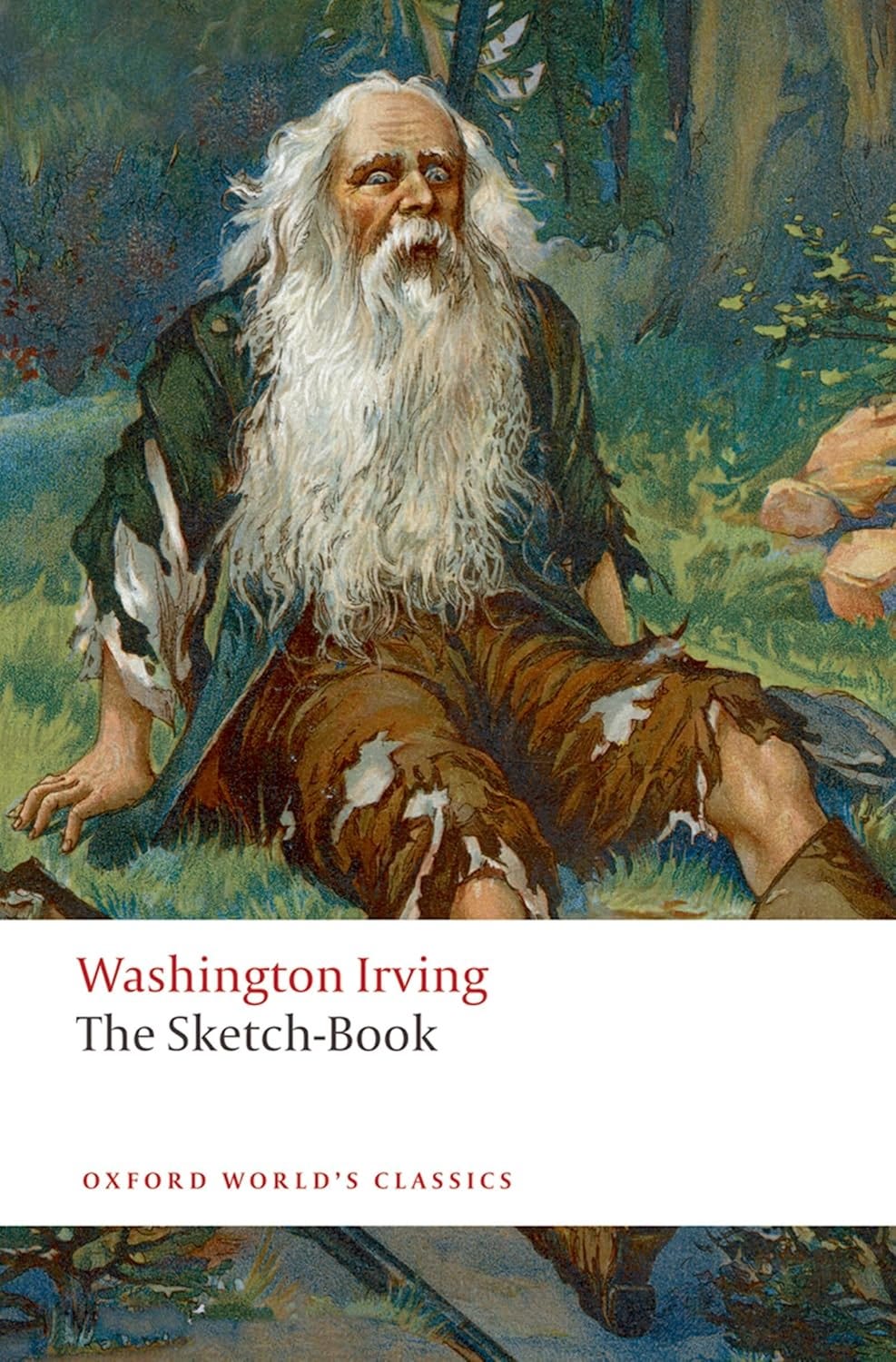
The Sketch-Book of Geoffrey Crayon, Gent. by Washington Irving (1819-20)
The Sketch-Book looks simultaneously towards audiences on both sides of the Atlantic, as Irving explores the uneasy relationship of an American writer to English literary traditions. He sketches a series of encounters with the cultural shrines of the parent nation, and in two brilliant experiments with tales transplanted from Europe creates the first classic American short stories, ‘Rip Van Winkle’ and ‘The Legend of the Sleepy Hollow’. The result was not only a hugely successful travel book; it exerted a strong formative influence on American writers from Nathaniel Hawthorne and Edgar Allan Poe to Henry James.
[UK / US] Oxford World’s Classics | 400 pages | introduced by Susan Manning
Coming Attractions and Other Notices
Future monthly read-alongs
For a sneak preview of our upcoming monthly read-alongs, take a peak here.
Catalogue
To mark the 80th anniversary of the Penguin Classics series this year, Penguin are publishing a complete catalogue of every Penguin Classic title currently available in the UK. It’s beautifully produced — and I’m proud to say that I helped to assemble the text inside.
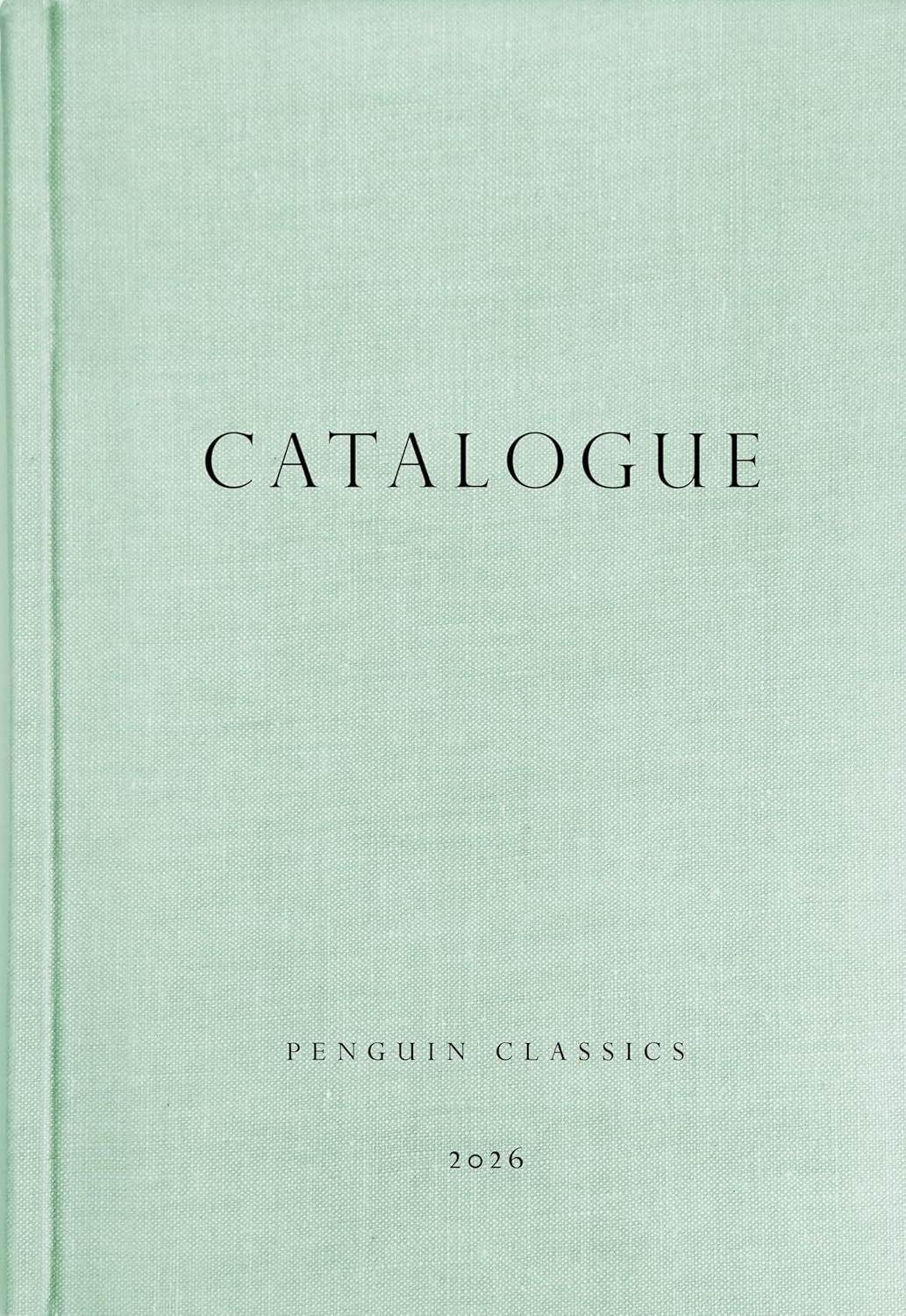
This 400-page Catalogue will be available to purchase from April 16th. Here is Penguin’s description:
From Achebe and Austen to Zola and Zweig, and from the Epic of Gilgamesh to twenty-first century dystopias and autofiction, here is the complete list of every Penguin Classic in print. Published in a beautiful clothbound format, the list is arranged alphabetically by author and also includes key bibliographic information such as sub-series, genre and ISBN. Comprising 3,500 entries, this is the essential reference guide to the world’s largest and best-loved classics list.
Annual book subscription
And if you’re enjoying our read-alongs, why not treat yourself to the Hatchards Classic Book Club annual book subscription?
You (or a friend) can receive all the books we read each month here on Read the Classics, beautifully gift-wrapped and delivered to your door, anywhere in the world, as well as a year’s complimentary subscription to Read the Classics, so you can choose to read along with us, if you wish.

To find out more, follow this link or email Hatchards directly: subscriptions@hatchards.co.uk

